
Travertine Stone Malaysia: What You Need to Know [2026 GUIDE]
![Travertine Stone Malaysia: What You Need to Know [2026 GUIDE]](https://images.squarespace-cdn.com/content/v1/633c2cca775c0c5c134c88ab/dc49256d-2cf9-4e8e-b5ff-f4cc04b5cc5f/silver-travertine-feature-wall-in-modern-pilates-studio-KL.jpg)
Silver Travertine Feature wall in Modern Pilates Studio KL
Travertine stone is having a moment in Malaysian interiors, and it's not hard to see why.
That warm, banded texture and natural void pattern photographs beautifully, and it's showing up everywhere from bungalow house feature walls in Damansara to condo bathroom floors in Mont Kiara.
But before you commit, there's quite a bit worth understanding: the price, the porosity, and whether it actually suits how Malaysians live and cook.
READ ALSO:
How To Choose The Right Stone For Your Dining Table
Best Stone For Outdoor Patios And Gardens In Malaysia
TLDR: Should I Choose Travertine Stone For My Home?
Best for flooring: Filled & honed travertine
Best for feature walls: Unfilled travertine
Best for kitchens: Light-use kitchens or backsplashes
Best outdoor application: Patios, garden paths & poolside areas
Best finish for indoor flooring: Honed finish
Best finish for rustic designs: Tumbled finish
Best for modern homes: Silver or ivory travertine
Best for natural warmth: Beige or walnut travertine
Best value: Turkish travertine
Best premium option: Italian travertine
Travertine stone can be a good choice for your home in Malaysia, but it depends on how and where you plan to use it.
It works best for travertine stone flooring in living areas, feature walls, and low-to-medium traffic spaces where design and atmosphere are the priority.
Some homeowners also use it as a softer alternative to travertine marble, especially when they want something more earthy and less polished than classic marble finishes.
In simple terms:
Choose travertine if you want natural beauty, warmth, and character
Be ready for maintenance, especially in wet or high-use areas
Consider it more for design impact than pure practicality
Summary Of Travertine Stone Types
| Travertine Option | Colour | Best For | Recommended Finish | Maintenance Level |
|---|---|---|---|---|
| Ivory Travertine | Warm ivory | Living rooms, flooring | Honed | Medium |
| Beige Travertine | Beige with natural banding | Whole-home flooring | Honed | Medium |
| Silver Travertine | Silver-grey | Feature walls, modern interiors | Honed | Medium |
| Walnut Travertine | Rich brown | Rustic feature walls | Tumbled | Medium |
| Filled Travertine | Various colours | Flooring, kitchens | Honed | Low–Medium |
| Unfilled Travertine | Various colours | Feature walls, cladding | Tumbled / Honed | High |
All You Need To Know About Travertine Stone
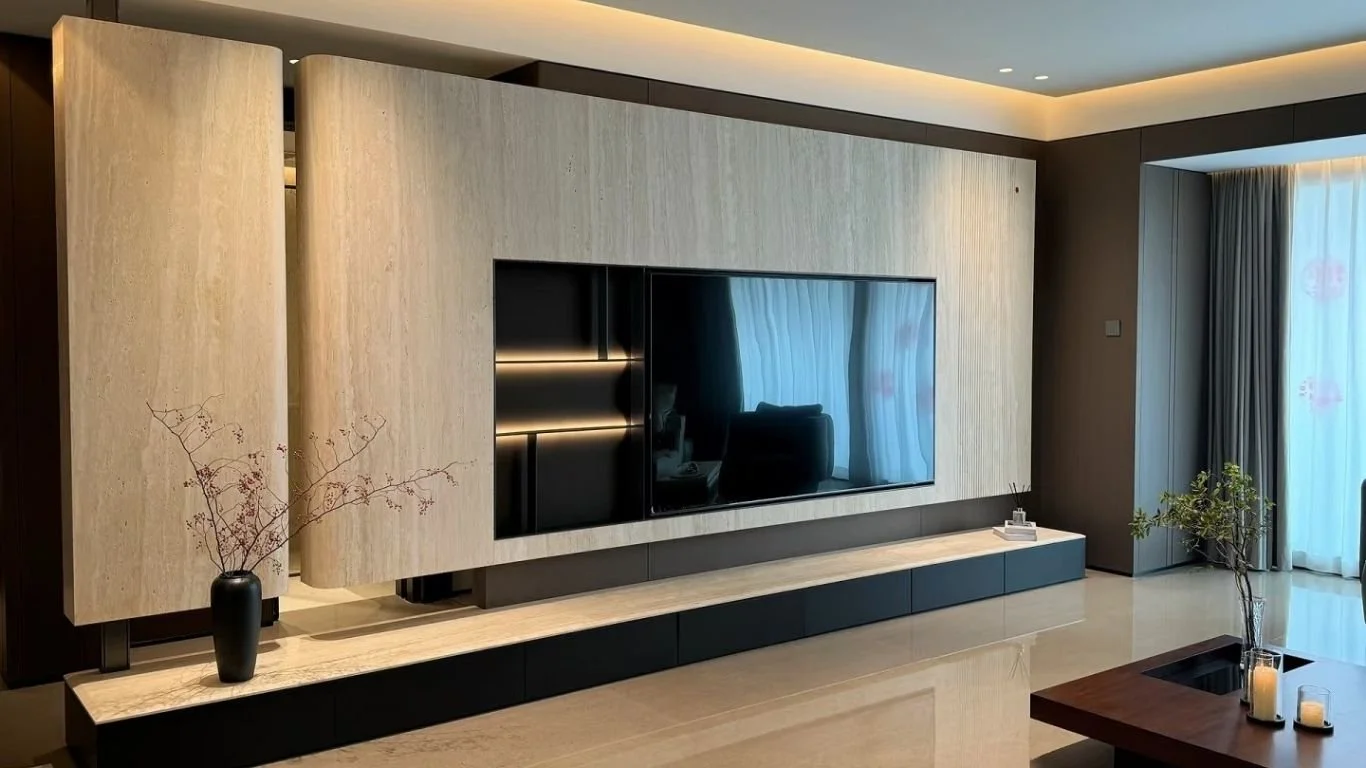
Travertine Stone Flooring Honed Finish Residential KL
Travertine is a natural limestone formed when mineral-rich water, typically from hot springs, deposits calcium carbonate in layers over thousands of years. The result is a stone with a distinctive banded texture, warm earthy tones (ivory, beige, walnut, silver), and those characteristic natural voids that give it its signature look.
It is absolutely a real, naturally occurring stone, not engineered, not manufactured.
Each slab is quarried directly from the earth, which means no 2 pieces are exactly alike.
For anyone asking whether travertine is the same as marble: they're related (both are calcium carbonate-based), but different.
Travertine is more porous, warmer in tone, and has a more rustic organic feel compared to marble's polished, veined elegance. If marble is the dress shirt, travertine is the well-worn linen — still quality, different character.
Key Characteristics Of Travertine Stone
Travertine is widely used in home projects because it combines natural beauty with practical performance.
Understanding its key features helps you decide whether it fits your home design, especially for flooring, walls, or kitchen applications.
Natural Appearance & Colour Variation
One of the defining features of travertine is its travertine stone texture, formed by natural mineral deposits over thousands of years. This creates visible layers, soft banding, and small voids that give each piece a completely unique look.
Common colours include:
Warm ivory and beige tones
Rich walnut shades
Cool silver-grey variations
This natural variation is also why some homeowners compare it to travertine marble, although travertine has a more earthy, textured and less polished appearance.
Surface Texture & Finishing Options
Travertine can be finished in different ways depending on where it is used:
Honed finish – smooth, matte surface; most common for indoor flooring
Polished finish – glossy and reflective; used when a more refined, marble-like look is desired
Tumbled finish – aged and textured; ideal for rustic or outdoor designs
These finish options allow travertine to adapt to both modern and traditional interiors, depending on the design direction.
Heat Performance & Comfort
One reason travertine is popular in tropical climates like Malaysia is its natural ability to stay cool underfoot. Unlike darker or denser stones, it does not retain heat easily.
This makes travertine stone flooring especially comfortable in living rooms, hallways, and areas where people walk barefoot. It creates a cooler indoor feel without relying on artificial cooling.
Durability & Lifespan
With proper sealing and maintenance, travertine is a long-lasting natural stone that can perform for decades. On average, well-maintained surfaces can last 50 to 100 years, depending on usage and care.
However, it is important to note that travertine is softer than granite. This means it can scratch or chip if exposed to heavy impact, so placement matters.
Travertine Stone Texture: Filled Vs Unfilled
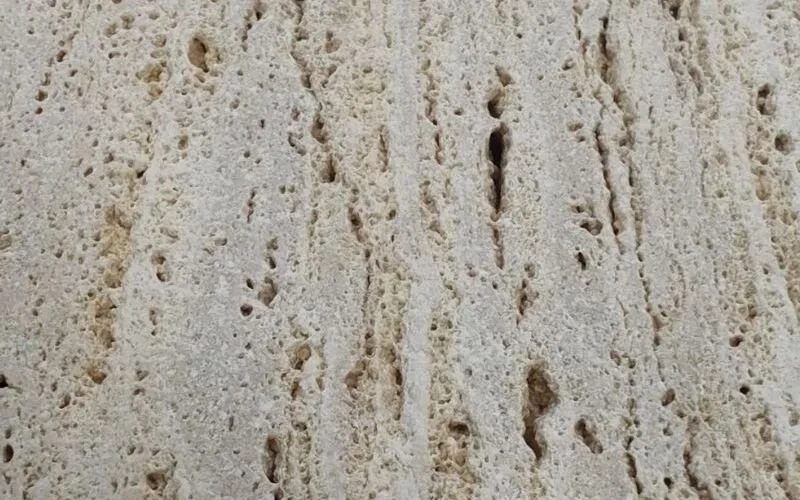
Travertine Stone Texture Natural Voids Unfilled Surface
One of the first decisions you'll make when choosing travertine is whether to go filled or unfilled, and it matters more than most people realise.
Unfilled travertine keeps the natural voids open. It has a raw, organic feel that looks spectacular on feature walls and cladding, but it traps dirt in residential flooring situations. Not ideal for a Malaysian kitchen.
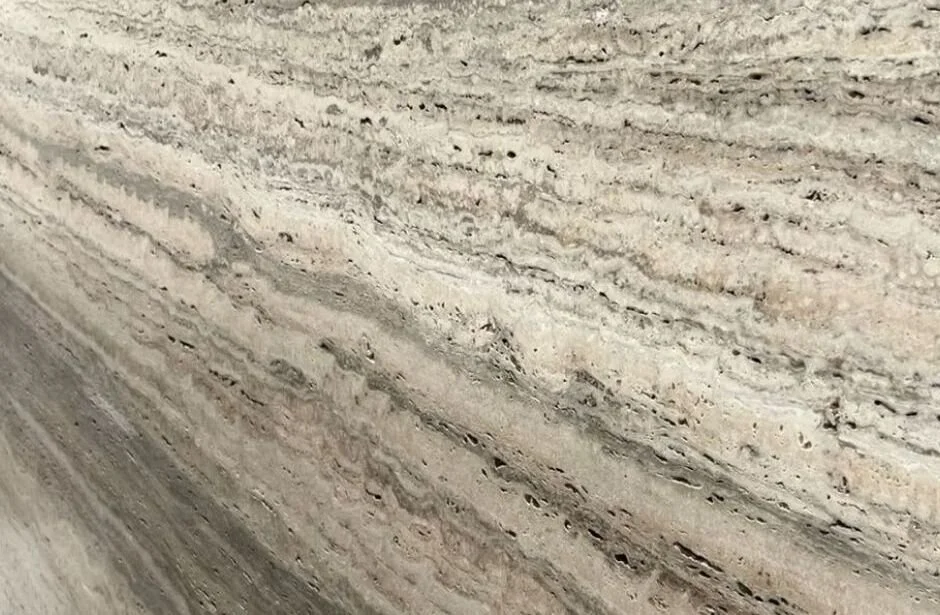
Travertine Stone Texture Natural Voids Filled Surface
Filled travertine has those voids filled with grout or resin during processing, creating a smoother surface that's more practical for flooring and kitchen applications. Most installers in KL will recommend filled travertine for any horizontal surface.
Honed finish gives a matte, flat surface — understated, shows fewer water marks. Most popular for flooring in Malaysia.
Polished finish brings out more sheen and depth — closer to marble in appearance, but less common with travertine as it can highlight filler lines.
Not sure which finish suits your project?
Talk to us here and we’ll help you figure it out
Where Travertine Works Best For Homes In Malaysia
Travertine Stone Flooring
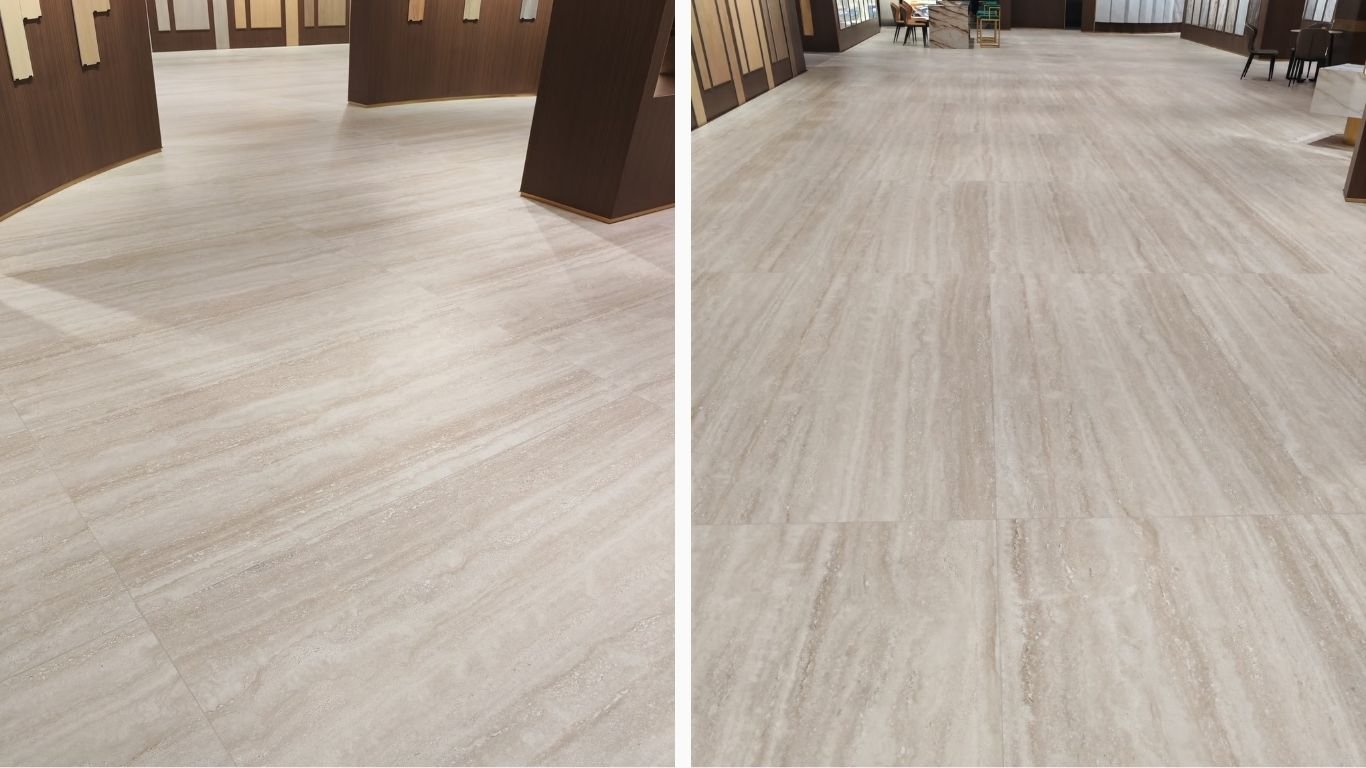
Travertine stone flooring
This is where travertine performs best in Malaysian residential projects. In a landed house with good indoor-outdoor flow — think an open living area that leads to a garden — travertine flooring creates a warmth that porcelain and sintered stone just can't replicate.
For indoor flooring in KL condos, stick with filled and honed travertine in a 600×600mm or 800×800mm format. Larger slabs (up to 1200×600mm) are becoming more popular for open-plan spaces.
One honest note: travertine is softer than granite and harder than marble in terms of everyday use. Drop something heavy on it and you may chip an edge. It's not fragile, but it's not bulletproof either.
Travertine Stone Cladding and Feature Walls
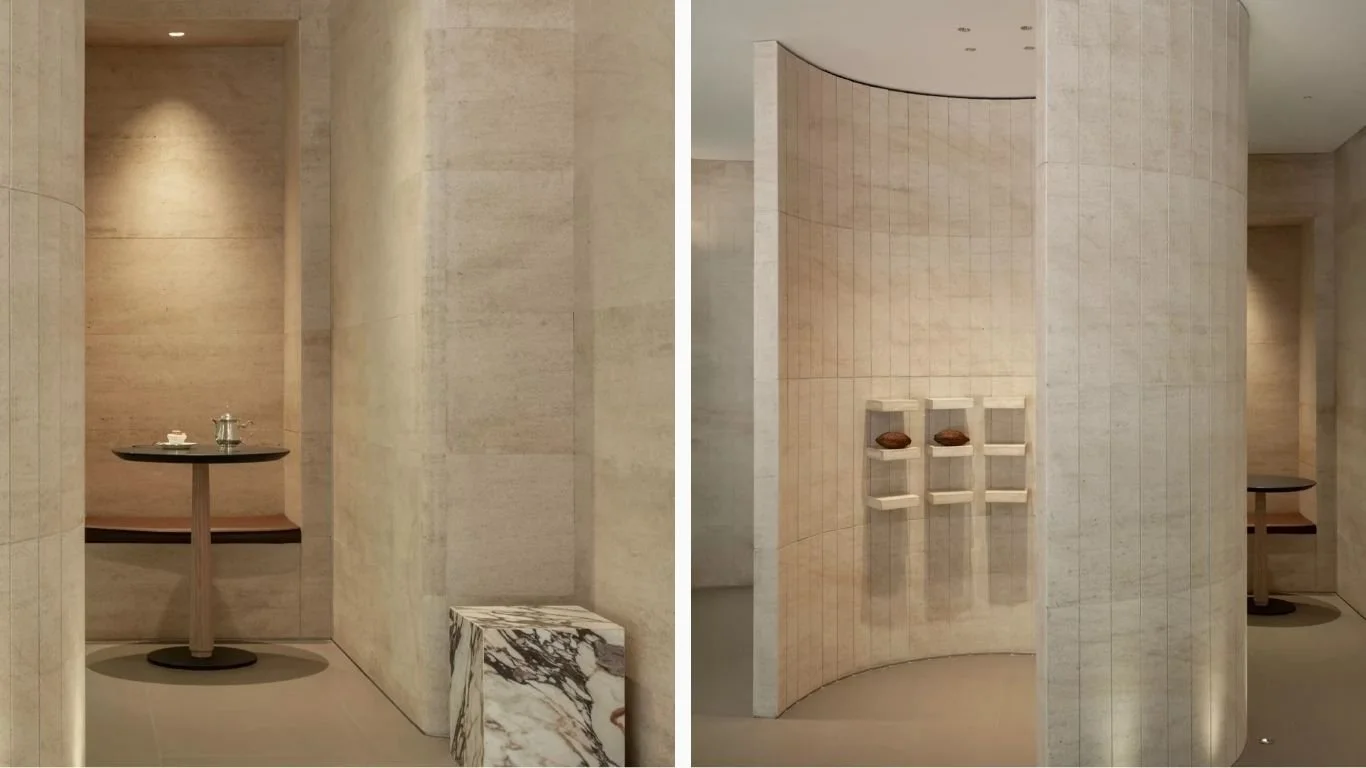
Travertine Feature Wall Living Room Malaysia
This is where unfilled travertine really earns its place.
A travertine stone feature wall, especially in a living room or entrance lobby, brings a level of texture and depth that no ceramic tile can really replicate. The natural voids catch light differently throughout the day, which gives the surface a quiet, shifting character.
It also fits perfectly into current tile trends in 2026, where the focus is moving away from flat, artificial finishes and towards natural materials with real texture and variation. It’s the kind of surface that often looks even better in person than in photos, which is something you don’t get with most modern tile options.
Travertine Stone Kitchen
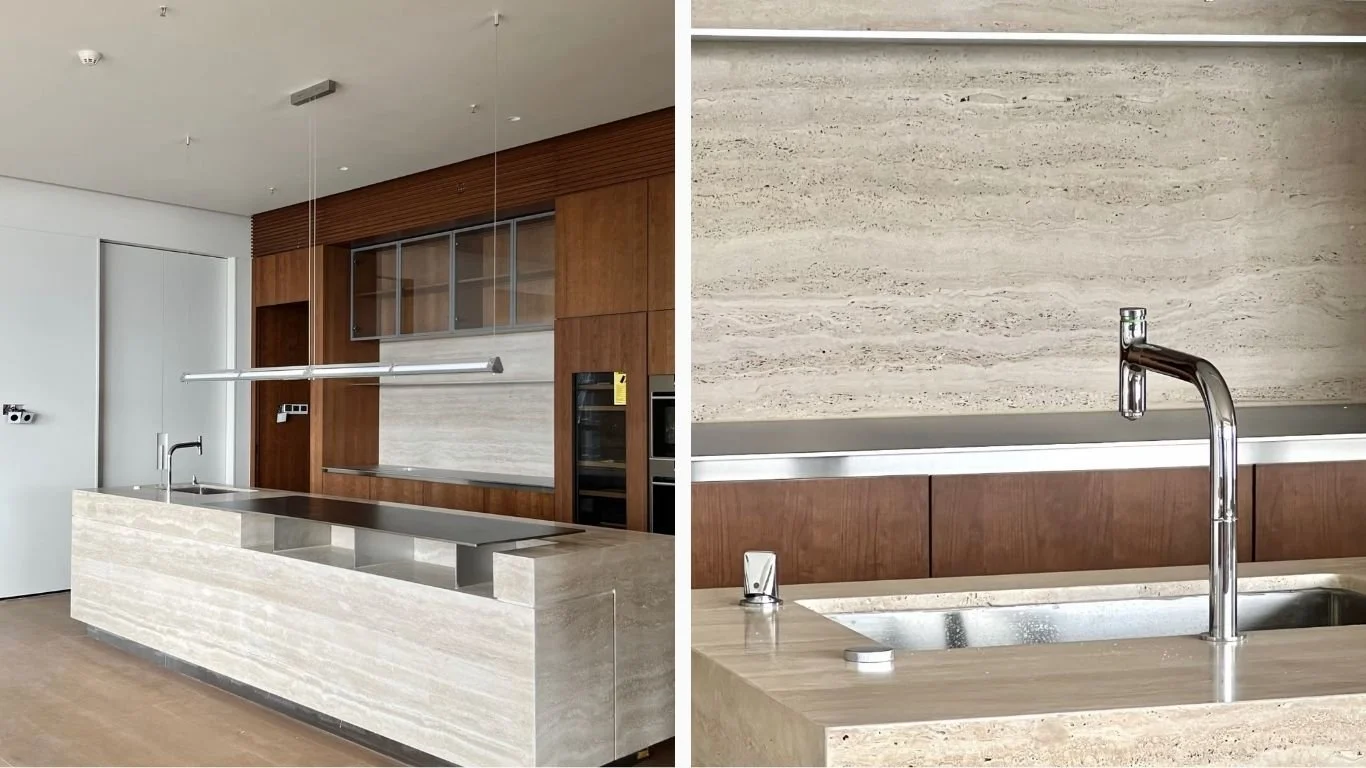
Travertine Kitchen Island Top Malaysia
Using travertine in kitchens is possible, but go in with your eyes open.
For a kitchen island top or backsplash in a light-use kitchen, someone who mostly reheats or cooks occasionally, it can work beautifully.
For a primary kitchen in a Malaysian household where you're frying, using heavy sauces, and cooking daily, a more resilient surface like granite or sintered stone is the more practical choice.
Travertine in the kitchen is a style decision. Make sure maintenance is part of your plan before you make it.
Planning a kitchen top and weighing your options?
WhatsApp us your layout and we’ll walk you through tiles option.
Pros and Cons of Travertine Stone
Pros Of Travertine Stone
Natural, Warm Aesthetic
Travertine has a soft, earthy look that instantly feels natural and calming. Its layered patterns and neutral tones make it suitable for both modern and classic interiors. This is also why many homeowners still choose travertine tile instead of more uniform-looking materials.
It is often compared to is travertine marble, but travertine feels less polished and more organic, giving interiors a relaxed, architectural feel.
Comfortable in Hot Climates
One of the biggest advantages of travertine is that it stays relatively cool underfoot. In Malaysia’s climate, this makes travertine stone flooring especially comfortable for living rooms, hallways, and outdoor transitions.
It helps reduce heat retention, making spaces feel naturally cooler without relying heavily on air-conditioning.
Good Grip for Outdoor Use
When finished with a honed or textured surface, travertine offers better traction compared to many polished stones. This makes it suitable for travertine tile outdoor applications such as patios, garden paths, and poolside areas where slip resistance matters.
Easy to Repair in Sections
Unlike large slab surfaces, travertine is usually installed in tiles or modular pieces. If damage happens, you can replace individual sections instead of redoing the entire floor. This makes long-term maintenance more manageable.
Natural and Environmentally Friendly
Travertine is a naturally formed stone with minimal processing compared to synthetic alternatives. Because of this, it is often considered a more eco-conscious material choice for flooring and wall applications.
Cons Of Travertine Stone
Requires Regular Maintenance
Travertine is naturally porous, meaning it absorbs liquids if not properly sealed. This makes natural travertine stone pros and cons a key consideration, it needs sealing during installation and periodic resealing to maintain its performance.
Without maintenance, stains from everyday spills can become difficult to remove.
Not Ideal for Acidic Exposure
Travertine reacts to acidic substances due to its calcium-based structure. This is why it may not be the best option for heavy-use kitchen surfaces, forming an important part of travertine stone pros and cons for kitchen decisions.
Spills from ingredients like vinegar, citrus, or wine can leave dull marks or surface etching.
Softer Than Other Natural Stones
Compared to granite or engineered materials like travertine quartz countertops, travertine is softer and can scratch or chip more easily under heavy impact or sharp objects. This is important in high-traffic or busy households.
More Expensive
Many people ask, is travertine expensive — and the answer is: it sits in the mid-to-premium range. While not the most expensive natural stone, costs can add up due to installation, sealing, and maintenance requirements.
Style Longevity Depends on Design Use
Some homeowners wonder, are travertine floors outdated.
The truth is they are not, but their popularity depends on styling. When paired with modern layouts and minimal design, travertine remains timeless. However, outdated patterns or heavy finishes can make it feel less contemporary over time.
Travertine Stone Price In Malaysia
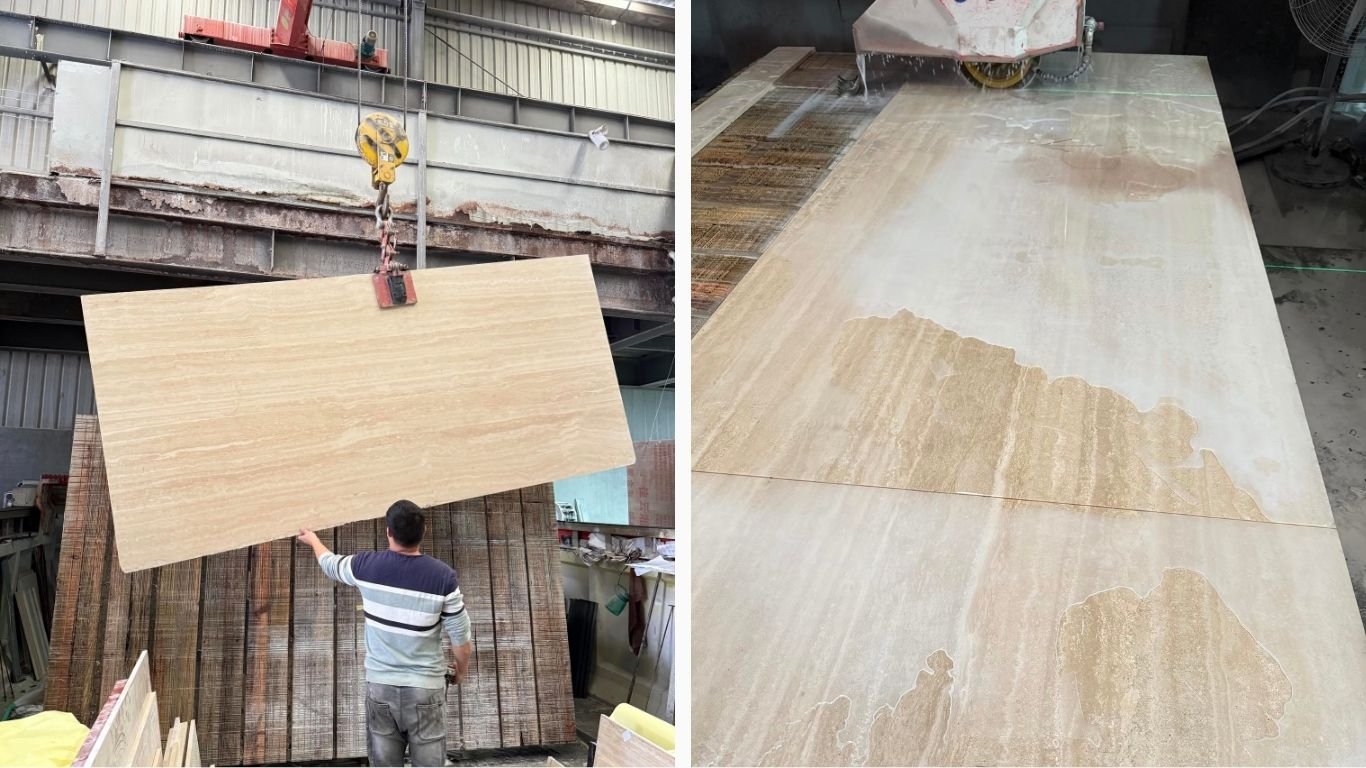
Travertine stone installation
Travertine sits in the mid-to-premium range of natural stones — more accessible than marble or onyx, less premium than quartzite.
As a rough guide for the Malaysian market:
Standard travertine tiles (600×600mm, imported) depending on origin and grade
Travertine slabs for feature walls or bespoke applications: priced differently — slab size, thickness (20mm or 30mm), and finish all affect the final number
Fabrication and installation costs are separate and depend on the complexity of the application
Italian-origin travertine (from Tivoli, the classical source) commands a premium. Turkish and Iranian travertine are more widely available in the KL market and more competitively priced — the quality range is wide, so sourcing matters.
The honest answer on travertine stone price: get a proper quotation based on your actual project area and specification.
A ballpark number without knowing your scope isn't useful to either of us.
The Practical Reality: Maintaining Travertine In Malaysia
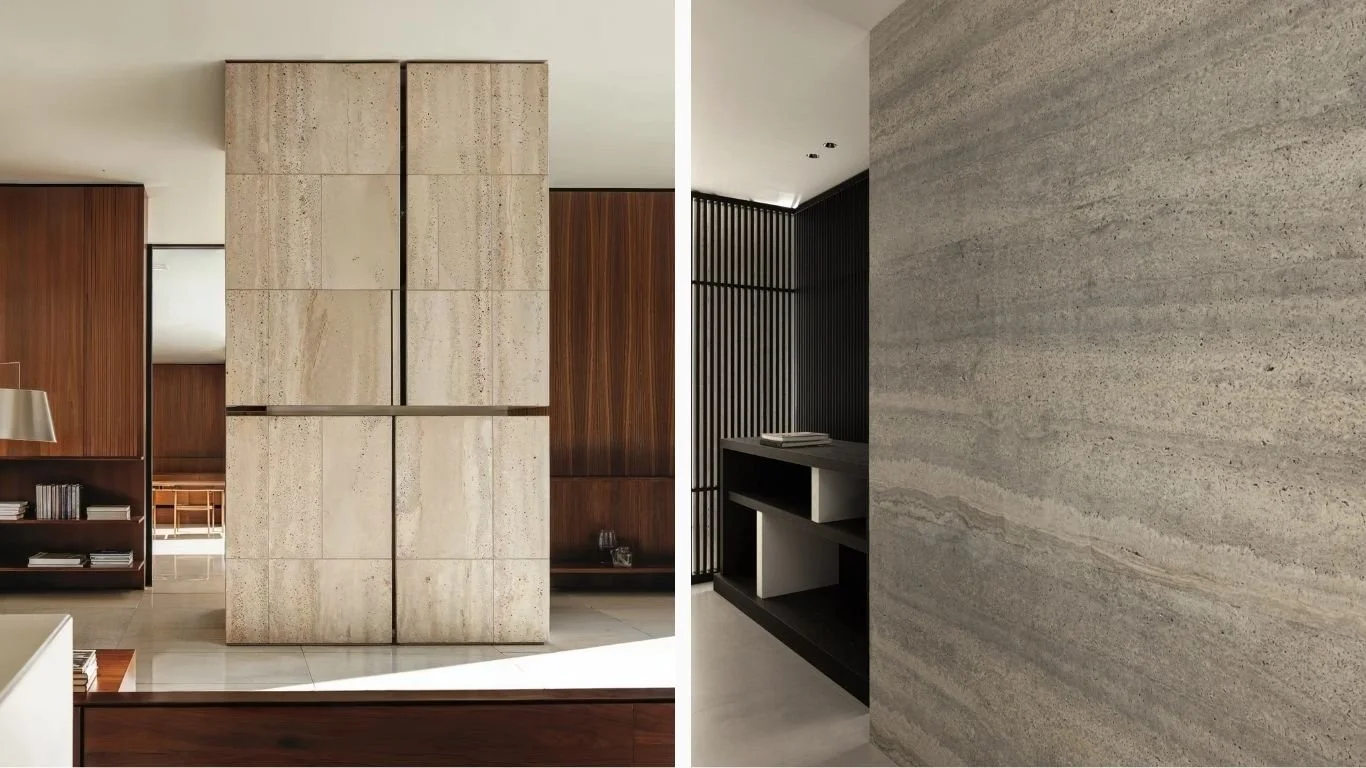
Maintaining Travertine Stone for your home
Travertine's porosity is the main thing to think through before buying.
In Malaysia's humidity, an unsealed or poorly sealed travertine surface — particularly outdoors — will absorb moisture, stain, and eventually develop mould or organic growth.
This isn't a reason to avoid it. It's a reason to seal it properly and maintain it.
Sealing schedule:
Indoor flooring: every 12–18 months with a quality penetrating sealer
Kitchen surfaces: every 6–12 months
External cladding or outdoor use: every 6 months, minimum
Use a pH-neutral cleaner. Acidic cleaners (vinegar, lemon-based) will etch calcium carbonate — this applies to marble too, and most homeowners learn this the hard way.
Chips and scratches on travertine can often be repaired with colour-matched filler — it doesn't have to be a catastrophic event. But prevention through proper maintenance is always easier than remediation.
Travertine Vs Sintered Stone: Which One Is Better?
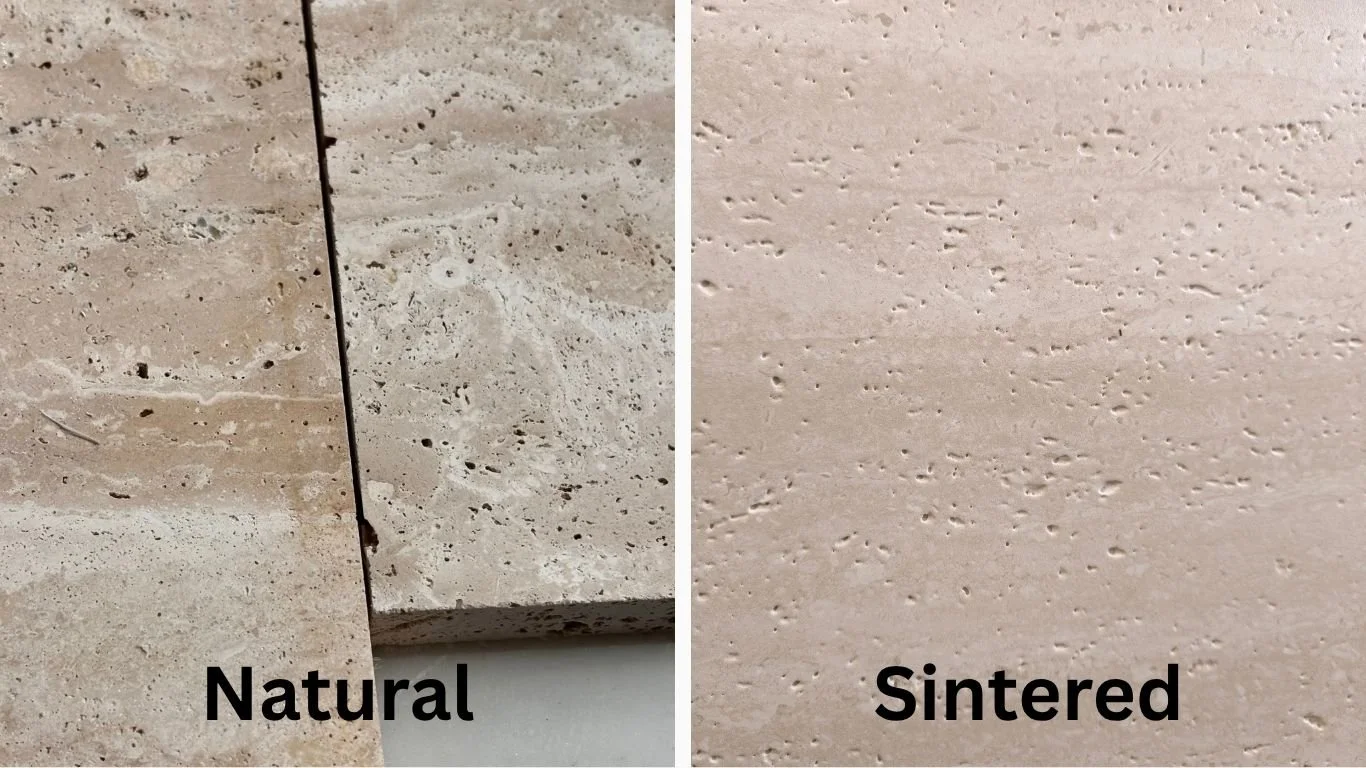
Travertine vs Sintered Stone Comparison Malaysia
A question that comes up often in KL renovation discussions. They are fundamentally different materials serving different priorities.
If you're choosing based on looks alone, travertine wins for organic character.
If you're choosing based on performance in a high-use Malaysian kitchen, sintered stone is the more practical answer.
Most projects we work on at Quickzone end up with a combination — sintered stone where performance matters, natural stone where beauty takes priority.
Is Travertine Worth It For Properties In Malaysia?
Yes, with the right application and expectations.
Travertine ages well. Unlike trendy finishes that look dated after 5 years, a well-maintained travertine floor or feature wall holds its character.
Properties in KL with natural stone finishes consistently hold stronger perceived value than those finished with ceramic or homogeneous tile.
But it's not a buy-and-forget material.
If you want a stone that requires almost no attention, look at granite or sintered stone. If you want a material with genuine natural presence and you're willing to maintain it, travertine is worth every ringgit.
FAQs About Travertine Stone In Malaysia
-
Travertine sits in the mid-to-premium range of natural stones in Malaysia.
It's more accessible than marble or onyx, but costs more than ceramic or homogeneous tiles.
Travertine stone price in Malaysia varies by origin (Italian vs Turkish), finish, and format.
Slab applications for feature walls or bespoke countertops will be priced separately based on thickness and size.
-
Yes, travertine is 100% natural.
It's a sedimentary limestone formed over thousands of years through mineral deposits from groundwater and hot springs.
If you're comparing it to sintered stone or porcelain tile, travertine is in a completely different category, it's quarried from the earth, not produced in a factory.
-
No, they are entirely different materials.
Travertine is a naturally formed stone quarried from the ground.
Sintered stone is an engineered surface manufactured under extreme heat and pressure using minerals and pigments.
Sintered stone can visually replicate the travertine texture, but it doesn't have the same organic variation, natural voids, or material authenticity.
-
Travertine's main practical limitation is its natural porosity.
Without proper sealing, it absorbs liquids, cooking oils, and dirt, which matters especially in Malaysian kitchens and outdoor spaces.
It's also softer than granite, meaning heavy impact can cause chipping over time.
In Malaysia's climate, outdoor travertine needs regular sealing (every 6 months) to prevent mould and organic staining.
-
Yes, but with caveats.
Travertine can work for kitchen islands or light-use kitchen surfaces if sealed properly and maintained regularly.
For a primary kitchen in a Malaysian home: daily cooking, high heat, frequent spills, granite or sintered stone is the more durable choice.
If the kitchen aesthetic is the priority and maintenance is manageable, travertine's texture is genuinely beautiful.
-
Both are calcium carbonate-based natural stones, but they behave differently.
Marble has a crystalline structure with dramatic veining patterns; travertine has a layered, banded texture with natural voids.
Travertine is generally more porous and slightly softer than marble.
In terms of character, marble reads as more formal and polished, travertine is warmer, more rustic, more organic.
-
At Quickzone's supplier yard in Klang Valley, you can view full travertine slabs in different finishes and origins before committing.
Seeing the material at full scale, rather than a small sample, makes a difference when planning a flooring or feature wall project.

