
Is Travertine Good for Bathrooms? Pros, Cons & What to Know
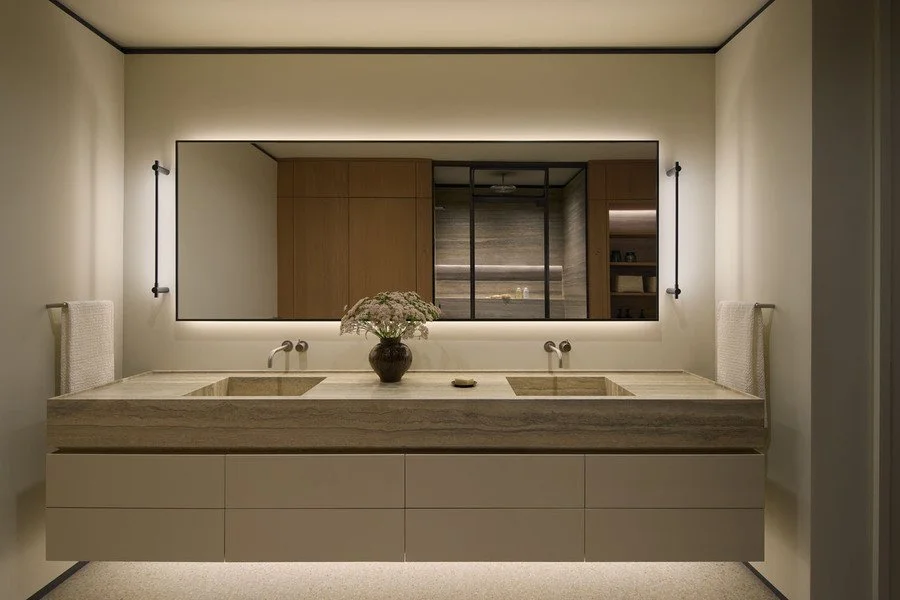
Travertine for Bathroom
Short answer: yes, travertine works well in a bathroom, but only if you choose the right finish for wet zones and go into it accepting a maintenance routine most tile buyers don't expect.
Homeowners who love how a travertine bathroom looks in photos are often surprised by what it takes to keep a travertine shower looking that way in Malaysia's humidity.
We've installed travertine bathroom tiles that have held up beautifully for a decade, and we've also been called in to fix travertine bathroom floors that failed within 2 years because the wrong finish went into a wet area. The difference almost always comes down to 3 decisions: finish, sealing, and where exactly in the bathroom it's used.
Thinking about travertine for your bathroom? Read on to see which finishes work best, where to use them, and how to maintain them.
READ ALSO:
Is Travertine Stone Still A Trend In 2026?
What You Need To Know About Travertine Stone
Tile Trends In Malaysia In 2026
TLDR; Is Travertine Good For Bathrooms?
Best for flooring: Filled & honed travertine
Best for shower walls: Honed or tumbled travertine
Best for feature walls: Unfilled travertine
Best finish for wet areas: Honed finish
Best for rustic bathrooms: Tumbled finish
Best for modern bathrooms: Silver or ivory travertine
Best for natural warmth: Beige or walnut travertine
Main advantage: Natural, unique appearance
Main drawback: Porous and requires regular sealing
Best low-maintenance alternative: Porcelain tiles
Yes, travertine can work beautifully in bathrooms, but it is not a completely maintenance-free material. Its porous surface means it requires more care than porcelain or ceramic tiles. Choose the right finish, seal it properly and clean it with suitable stone-safe products to keep it looking its best.
Not sure where to start?
Contact us for help choosing the right travertine finish, or explore our travertine collection to find the right option for your bathroom.
Travertine Stone For Bathrooms: Quick Summary
| Factor | Travertine for Bathrooms |
|---|---|
| Appearance | Natural, warm & unique |
| Best uses | Floors, walls & shower walls |
| Best finish | Honed |
| Water resistance | Requires sealing |
| Maintenance | Moderate |
| Main drawback | Porosity |
| Best alternative | Porcelain tiles |
The Real Advantages Of Travertine In A Bathroom
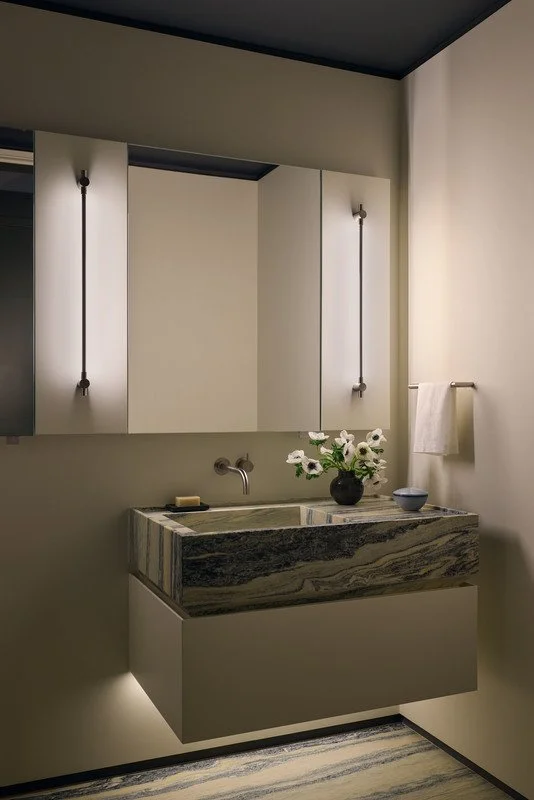
Travertine for bathroom sink
Natural slip resistance — unlike polished marble or ceramic, unfilled/tumbled travertine has a naturally pitted, textured surface. That's the single biggest reason it suits bathrooms better than most polished stone.
Stays cool and comfortable underfoot — travertine's porosity means it doesn't hold heat, which matters in a tropical bathroom that already runs warm.
Genuinely unique look — no two travertine bathroom tiles read exactly the same. If you want a bathroom that doesn't look like it came out of a tile catalogue, this is a real point in travertine's favour.
Warmer, more organic tone than marble — for homeowners who find polished marble bathrooms feel cold or showroom-like, travertine gives the same premium-stone feel with a softer, earthier finish.
The Real Drawbacks Of Travertine In A Bathroom
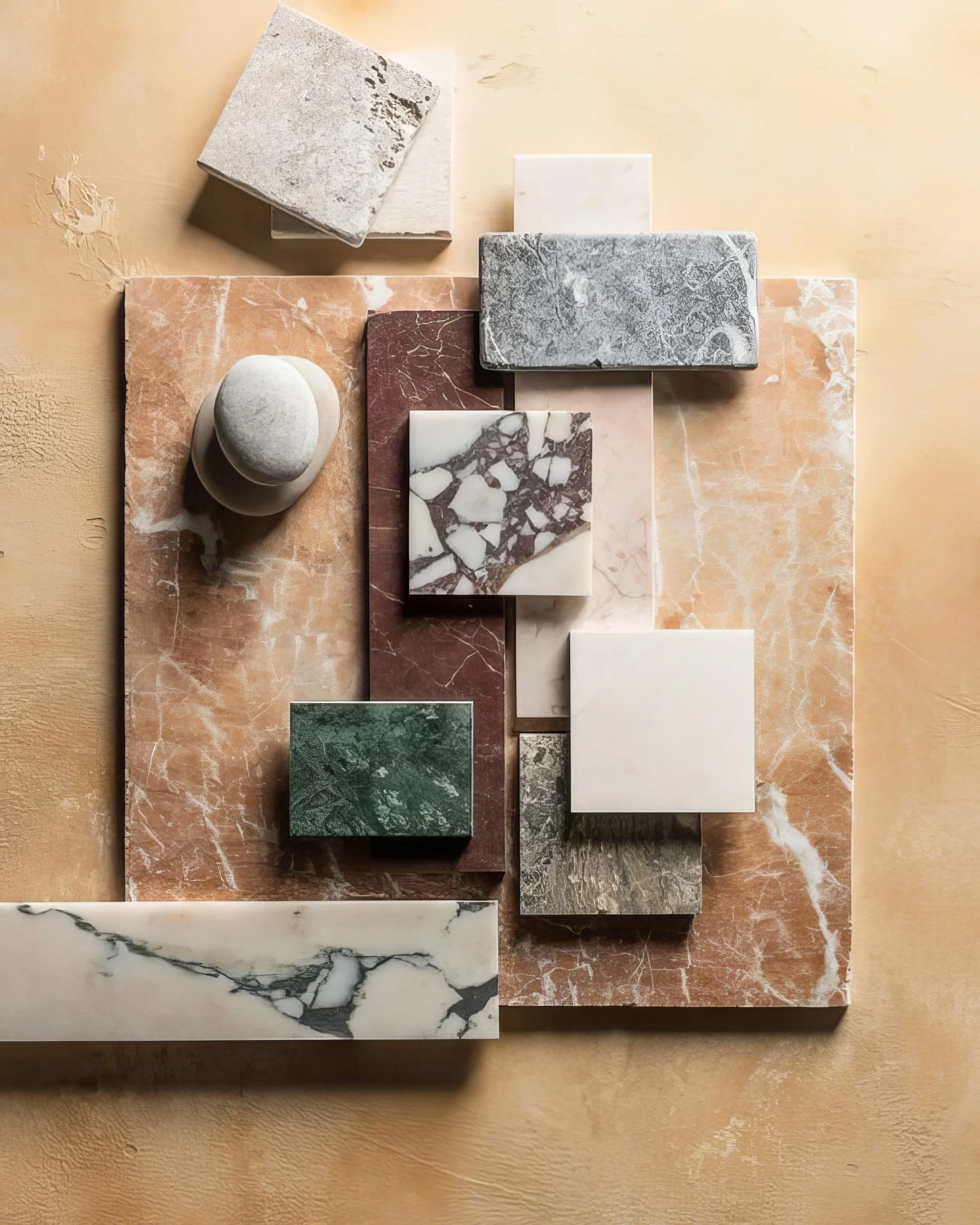
Natural stone choices for bathroom
This is the part most travertine bathroom ideas boards skip.
It's porous. Travertine is naturally full of small voids. Left unsealed, soap scum, hard water, and mildew work their way in, especially inside a shower enclosure that never fully dries between uses.
Sealing is not optional, and it's ongoing. A travertine bathroom floor needs resealing more often than the same stone used in a living room, realistically every 12–18 months in a Malaysian bathroom, not the 2–3 year cycle you'd get away with elsewhere in the house.
Grout and filler lines need attention. Filled travertine (voids pre-filled with epoxy or grout) is easier to maintain than unfilled, but the fill can still degrade in a constantly wet shower and needs periodic touch-up.
Acidic products damage it. The same etching risk that affects marble applies to travertine — no vinegar-based bathroom cleaners, no strong descalers directly on the stone.
These aren't reasons to avoid travertine. They're reasons to be specific about where in the bathroom it goes and which finish you use, which is the part most generic guides gloss over.
Is Travertine Tile Good For A Shower?
This is the question that actually determines whether your renovation goes smoothly, and the honest answer is: it depends entirely on the finish, not the stone.
Tumbled or brushed travertine is the right call for a shower floor. The texture that makes it feel "rustic" is also what keeps it from becoming dangerously slippery when wet.
Polished travertine has no place inside a shower enclosure. It looks stunning dry and becomes a hazard the moment water hits it — we don't recommend it for shower floors under any circumstance, regardless of what a supplier tells you.
Filled travertine is generally easier to keep watertight in a shower than unfilled, since there are fewer open pores for water to sit in.
Grout width and sealing at the shower niche and drain matter more than the stone choice itself, this is where most travertine tile shower problems we get called out for actually originate: gaps at transitions and drains that weren't sealed properly during installation, not the stone failing on its own.
If your contractor is proposing polished travertine for a shower pan, that's worth questioning directly.
Travertine Bathroom Floor: What To Know Before You Commit

White travertine tiles for bathroom
Outside the shower, travertine bathroom floor tiles behave more like any other natural stone floor — the risk profile drops significantly once you're out of constant standing water.
For the dry and semi-wet zones of the bathroom (vanity area, floor outside the shower), honed travertine gives a smoother, more refined look while still offering better grip than polished stone. This is where most homeowners land: tumbled or honed travertine bathroom tiles on the floor, reserving the most aggressively textured tumbled finish specifically for the shower pan itself.
Thickness and substrate prep matter here too — the same moisture-control principles that apply to any natural stone floor in Malaysia's climate apply doubly in a bathroom, where the substrate is exposed to standing water daily, not just humidity.
Small Travertine Bathroom? Design Tips That Make It Work
A small travertine bathroom can go two ways: it either reads as rich and cohesive, or busy and closed-in, depending on tile size and layout.
Use larger-format travertine bathroom tiles with fewer grout lines to avoid visually shrinking the space.
Keep vein and pattern direction consistent between floor and shower wall where they meet, rather than mixing orientations.
Lighter, warmer travertine tones (cream, ivory) read more spacious under bathroom lighting than deeper browns or greys.
Carry the same travertine finish from floor to a low shower curb rather than introducing a second material, which keeps a small space visually continuous.
Updating An Older Travertine Bathroom
If you're not starting from scratch, say you've inherited a dated travertine bathroom from a previous renovation, a full retile isn't always necessary.
Deep cleaning and reapplying an impregnating sealer can bring back a surprising amount of the original texture and colour if the stone itself is structurally sound.
Where the travertine bathroom floor has genuinely degraded (heavy pitting, failed grout, staining that won't lift), spot-replacing affected tiles is usually more cost-effective than a full tear-out, provided you can source a reasonably close match.
For homeowners chasing more modern travertine bathroom ideas without a full renovation, changing the finish on fixtures and travertine bathroom accessories (matte black or brushed brass fittings against warm travertine tones) updates the feel of the space without touching the stone at all.
Not sure whether your travertine bathroom needs replacing or simply a refresh?
Contact us to discuss your existing stone.
Want The Travertine Look Without The Maintenance? Consider Sintered Stone
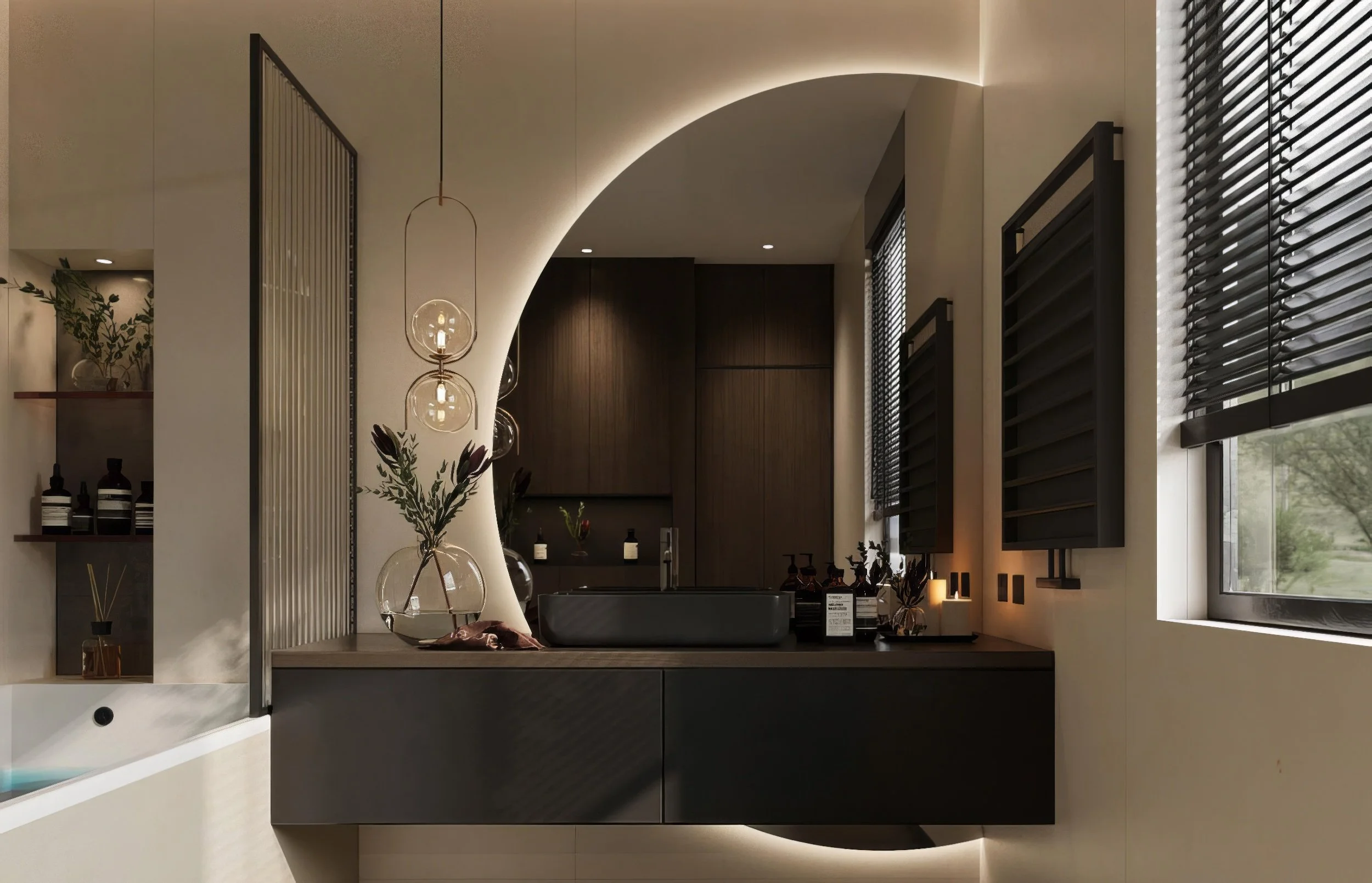
Sintered stone for bathroom sink
Everything above assumes you're set on natural travertine. If the sealing schedule is the part giving you pause, there's a real alternative worth knowing about before you commit: sintered stone finished in a travertine look.
Sintered stone is engineered under extreme heat and pressure, which makes it essentially non-porous: no sealing, no etching from bathroom products, no ongoing maintenance routine beyond normal cleaning.
For a bathroom specifically, it gives you the warm, natural-stone appearance homeowners want from travertine without the upkeep that comes with the real thing. You get two finish options that both work well in wet zones:
Matte finish — a soft, non-reflective surface that stays slip-resistant underfoot, closest in feel to a honed natural stone floor. Good fit for the dry-to-semi-wet zones of the bathroom.
3D textured finish — a more pronounced, tactile surface texture that replicates travertine's natural pitting. This is the stronger choice specifically for shower floors, where grip matters most.
Neither finish needs resealing, ever, which is really the whole pitch.
A sintered stone bathroom is the option for homeowners who want the travertine look with genuine peace of mind: no sealing reminders, no etching risk from a forgotten acidic cleaner, no touch-up on filled voids years down the line.
The trade-off is that it's a manufactured surface rather than natural stone, so if what you value most is the one-of-a-kind variation of real travertine, that's the thing you're giving up for the lower maintenance.
Thinking About Travertine For Your Bathroom?
Travertine can be one of the best-looking, most comfortable materials you put in a bathroom, as long as the finish matches how wet each zone actually gets, and you go in with realistic expectations on sealing.
Get that right, and a travertine bathroom will hold up for years. Get the finish wrong, and you'll be calling someone to fix it within 12 months.
If you're planning a bathroom renovation, send us your layout and we'll recommend the right travertine finish for each zone: shower, floor, and vanity, before anything gets ordered.
Book a free consultation with Quickzone or WhatsApp us directly to talk through your bathroom projects.
FAQs About Travertine For Bathrooms
-
Travertine is naturally porous, which means it absorbs moisture, soap scum, and stains if not sealed regularly.
It's also sensitive to acidic cleaning products, which can etch the surface, and it needs resealing more often than denser stones like granite — particularly in constantly wet areas like a shower.
-
No, if anything, travertine has seen renewed interest as homeowners move away from stark, all-white bathrooms toward warmer, more textured natural materials.
The trend has shifted toward tumbled and honed finishes over the high-polish look, but travertine itself remains a strong, current choice.
-
It depends on where in the bathroom. Travertine's natural texture makes it the safer, more slip-resistant choice for shower floors.
Marble offers a more refined, uniform look and works well in dry zones like vanity tops, but its higher polish is a liability in wet areas.
-
For wet zones like showers, tumbled or honed travertine and textured granite are the safest choices due to slip resistance.
For dry zones, marble, polished granite, and honed limestone all work well. The right choice depends on how the space is zoned between wet and dry areas.

